DualPore

This business efficiently recovers precious metals, including palladium, from ultra-low concentrations (0.1 ppm or higher).
Using synthesis technology that forms Dual Pore silica with a dual structure, we recover precious metals from wastewater and rinse water generated in electronic component manufacturing and chemical synthesis processes.
We currently operate a joint recovery and revenue-sharing business model with customers in both domestic and overseas markets.
- What is the DualPoreSystem (DPS technology)?
- Strength 01:Specialized for low-concentration recovery
- Strength 02:Compact system design
- Strength 03:Global transactions enabled by non-waste, non-hazardous handling
- Strength 04: Minimized initial investment through a subscription model
- Strength 05:Resource recovery from difficult-to-recover processes
- Case Study
What is the DualPoreSystem (DPS technology)?
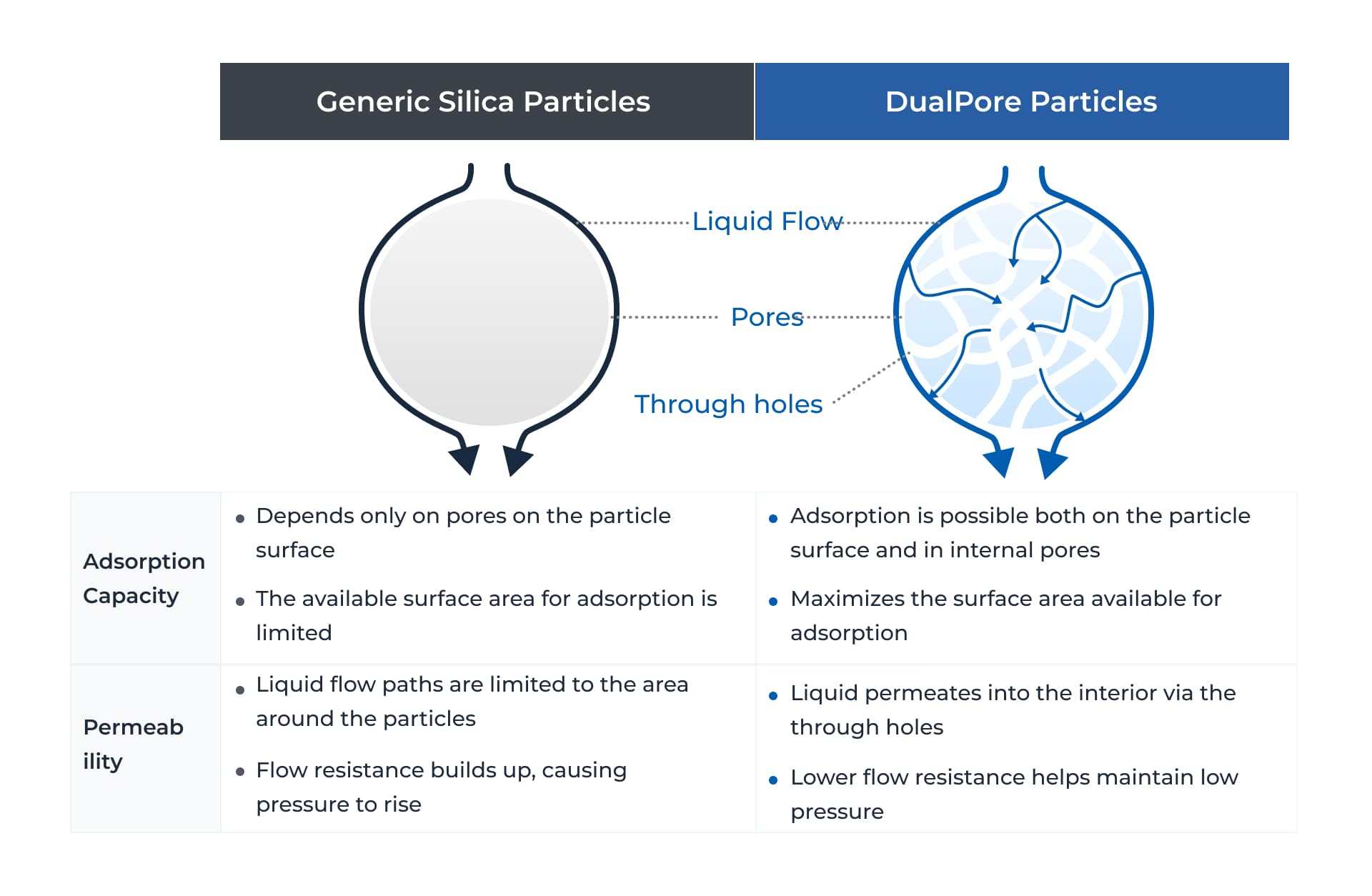
By combining pores and through holes with surface modification technology, DPS achieves both high adsorption performance and high liquid permeability.
DPS technology achieves both high adsorption capacity and high liquid permeability through a “dual structure” of pores and through holes, together with surface modification.
-
Pores (nanoscale)
Countless pores exist inside each particle and serve to adsorb and recover substances.
-
Through holes (microscale)
Channels that penetrate the particles like a jungle gym, allowing liquids and substances to quickly reach deep inside the particles.
-
Surface modification
Ligands that bind to specific precious metals are chemically attached so that the material selectively adsorbs precious metals.
Advantages of DPS Technology
DPS cartridges enable easy and rapid adsorption and recovery.
Strength 01
Specialized for low-concentration recovery
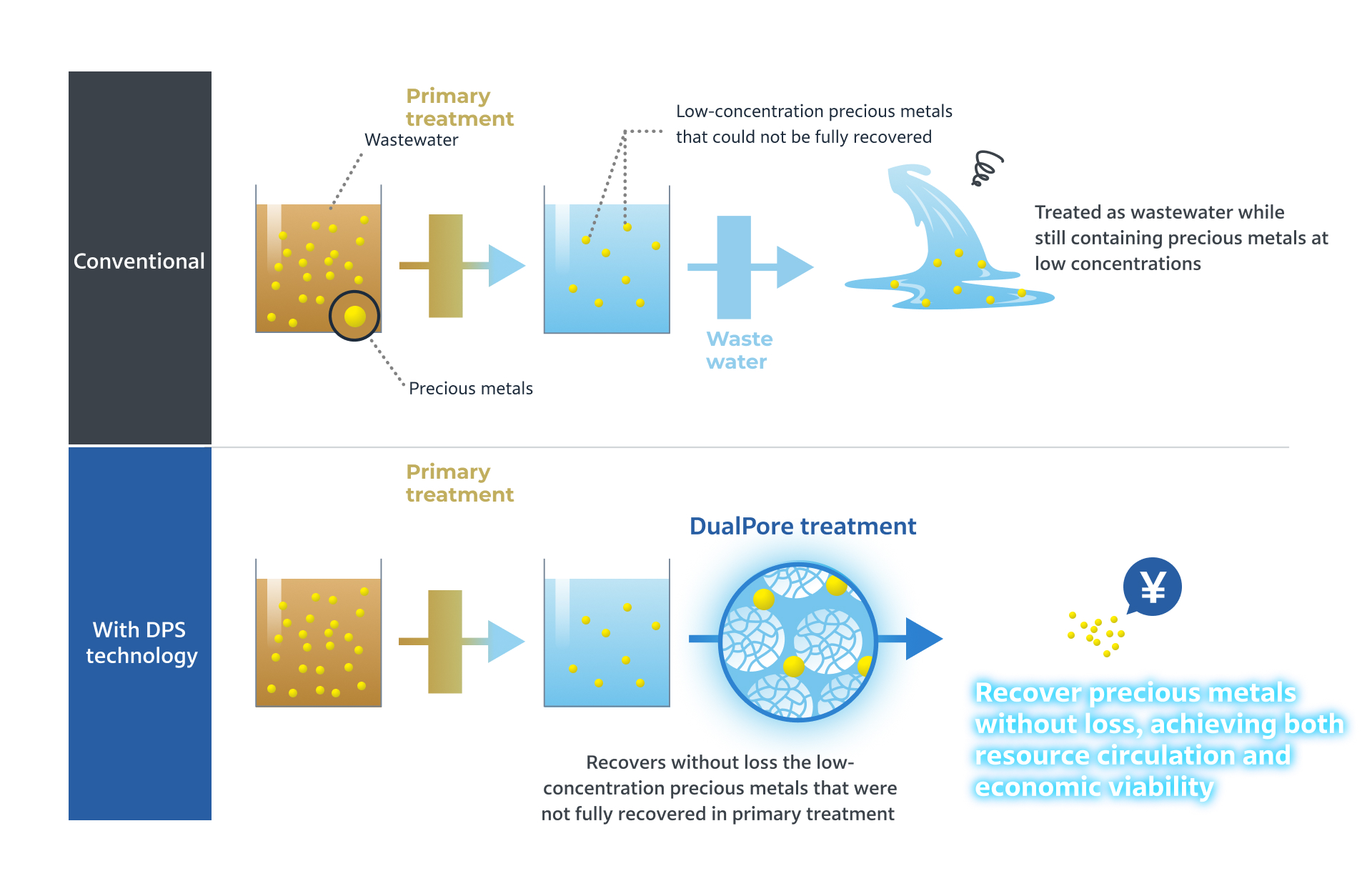
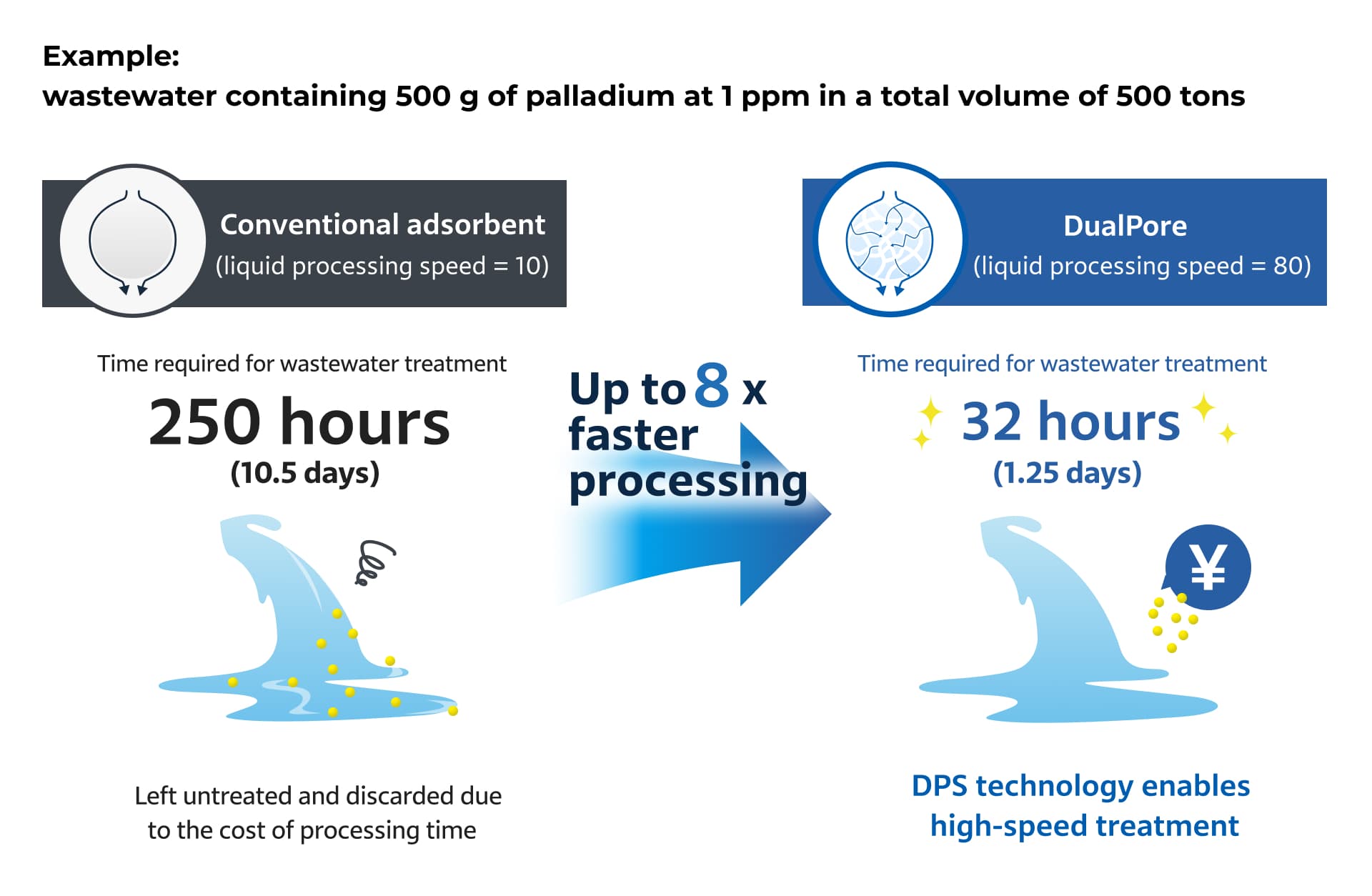
DPS is specialized for downstream recovery after the standard recovery process (from 0.1 ppm and above), providing customers with a new way to make effective use of previously untapped resources.
Because it delivers high performance even under low-pressure conditions, it does not require expensive pumps or large, complex equipment. Its excellent liquid permeability also enables large-volume processing at the ton scale.
Its superior adsorption performance makes it possible to quickly adsorb and recover residual precious metals even at extremely low concentrations.
It broadens recovery and recycling options for trace precious metals that previously could not be economically concentrated due to processing time, transportation costs, or capital expenditure.
Strength 02
Compact system design
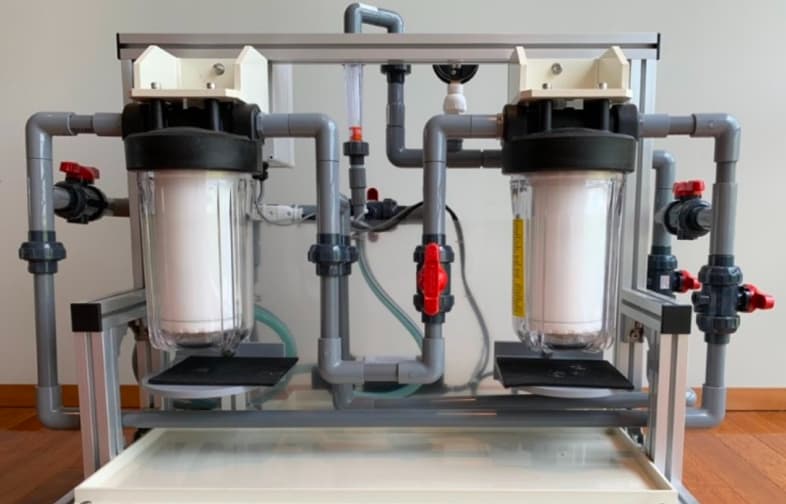
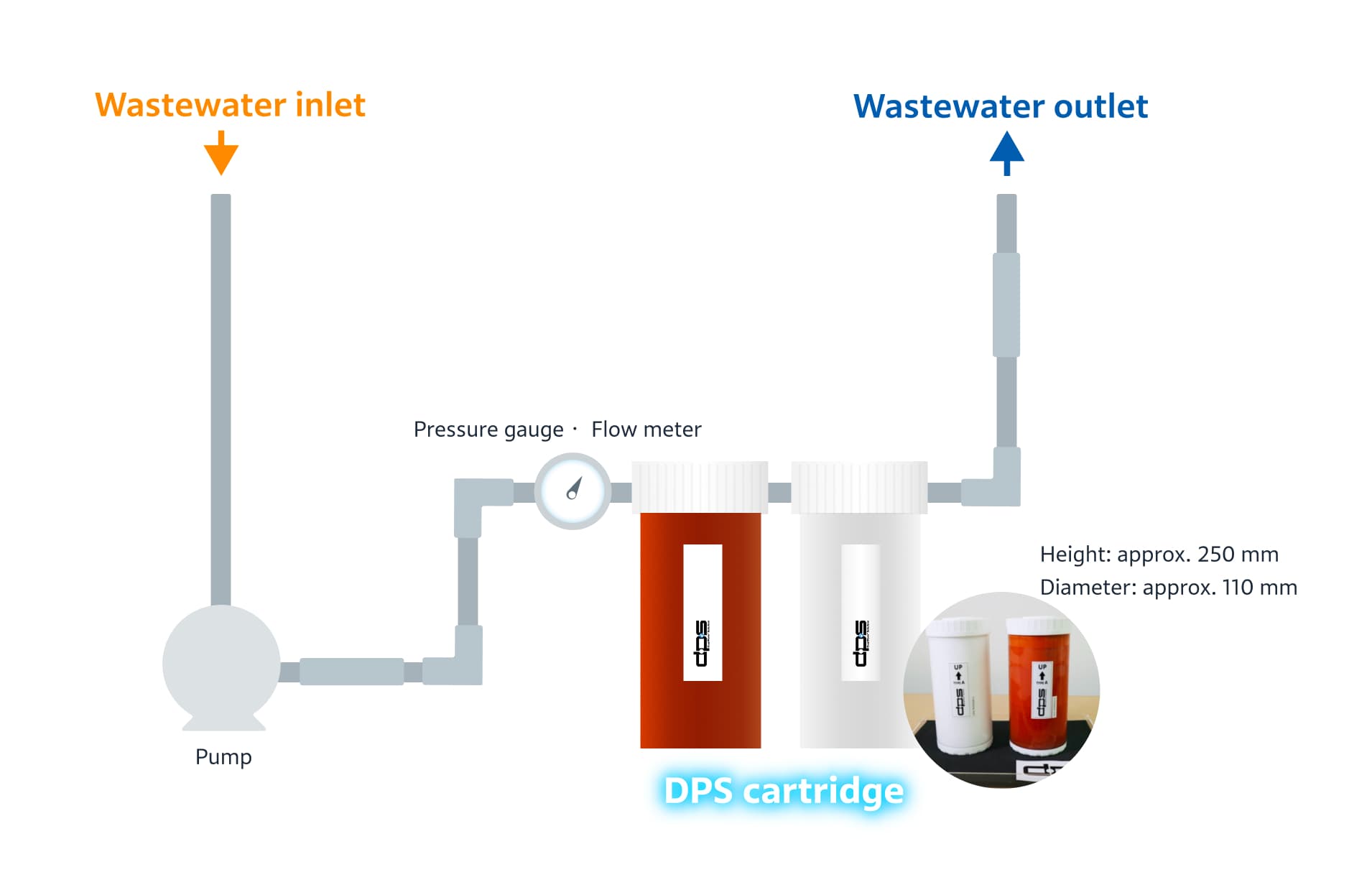
The compact equipment design maximizes installation flexibility.
1. Can be added to an existing production line
2. Simply installed downstream of an existing recovery unit
3. Compact design that requires only a small footprint
Strength 03
Global transactions enabled by non-waste, non-hazardous handling
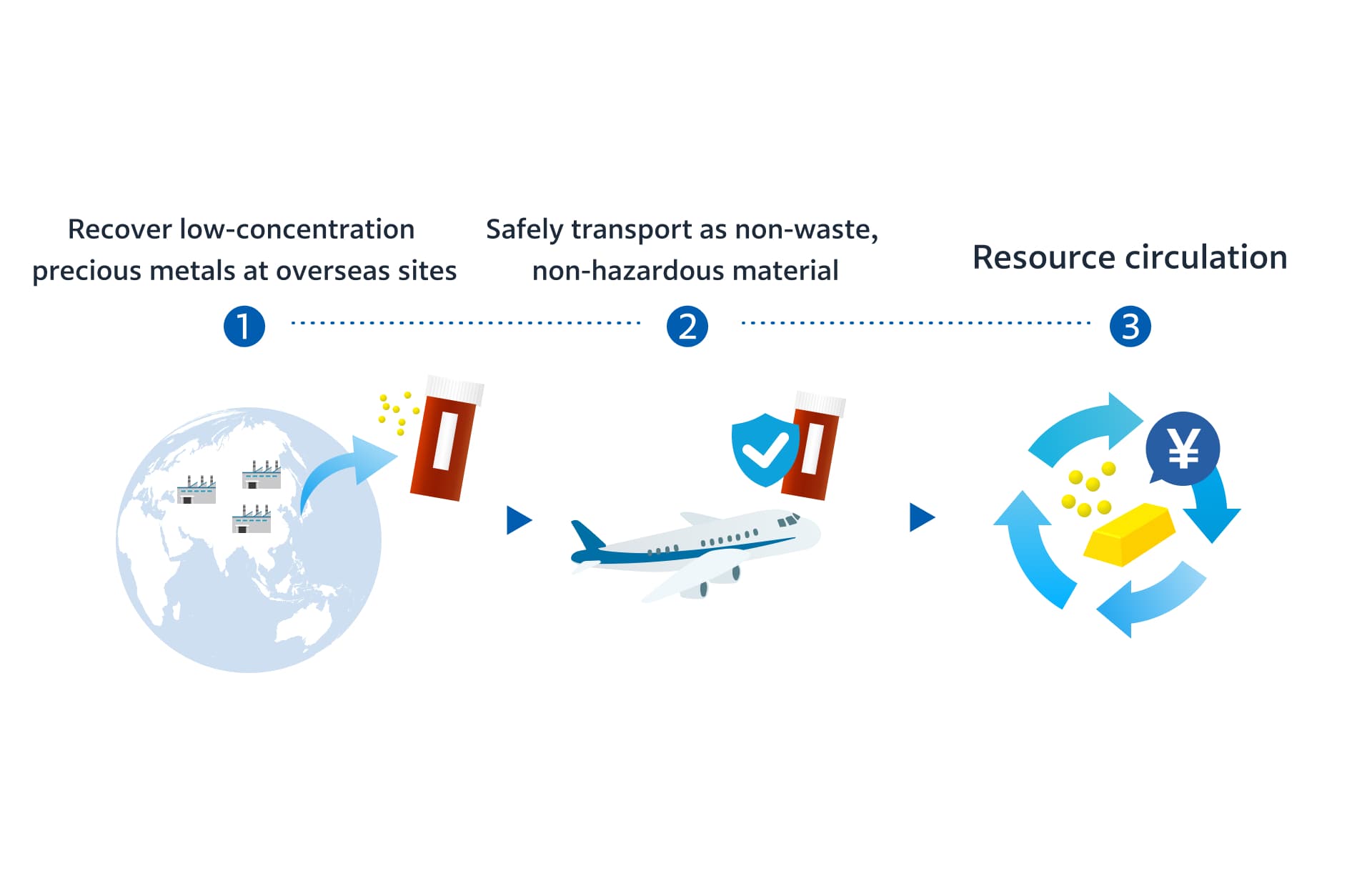
Thanks to the highly selective adsorption of DPS technology, adsorbed and recovered precious metals can be transported and classified as non-waste and non-hazardous materials.
Leveraging this capability, we can also support recovery operations in overseas regions where no smelting facilities are available.
Strength 04
Minimized initial investment through a subscription model
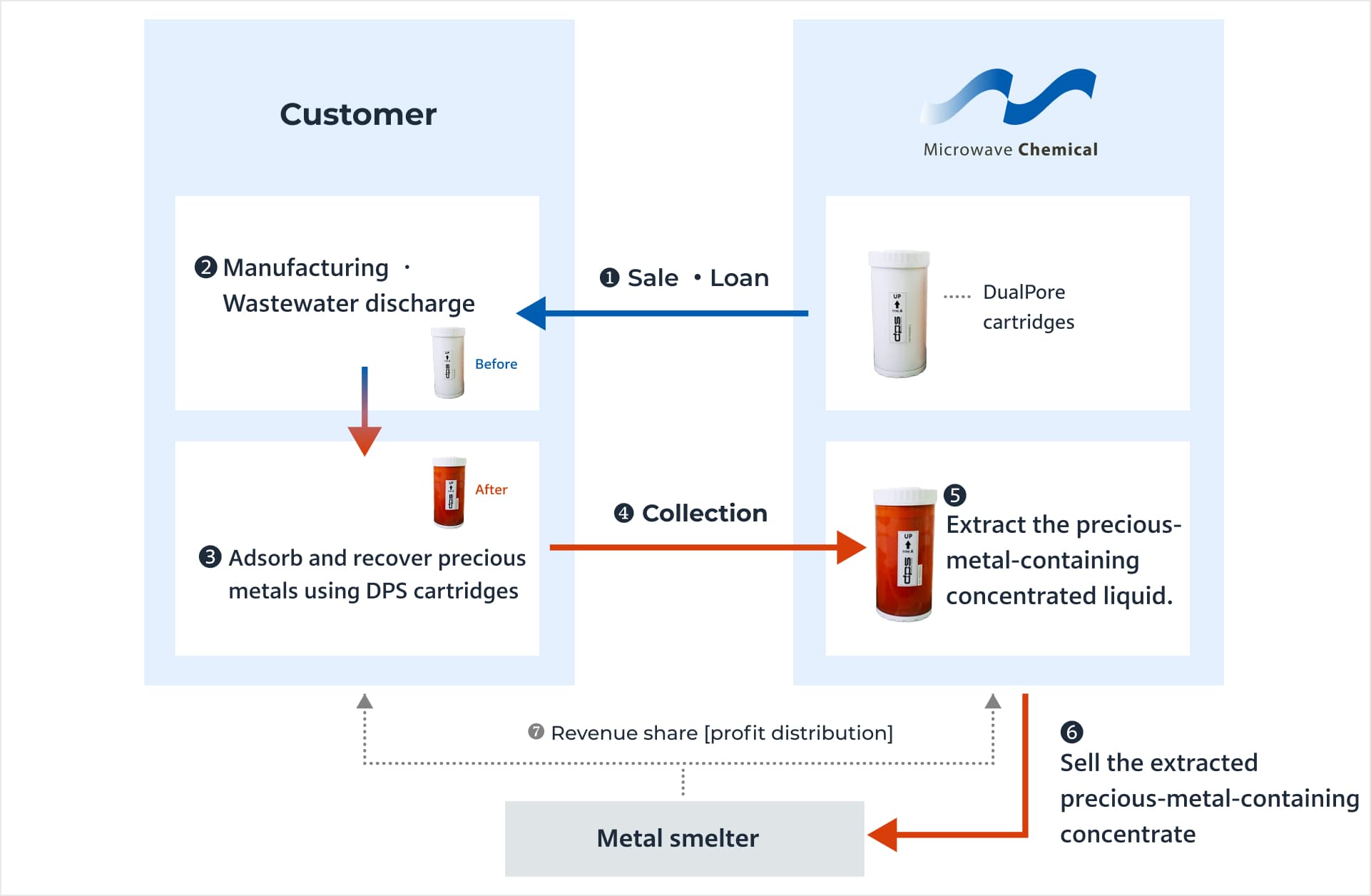
To minimize customers’ initial investment, we offer a subscription model in which DPS cartridges are lent to customers, precious metal recovery is carried out jointly, and the value of the recovered metal is shared.
Strength 05
Resource recovery from difficult-to-recover processes
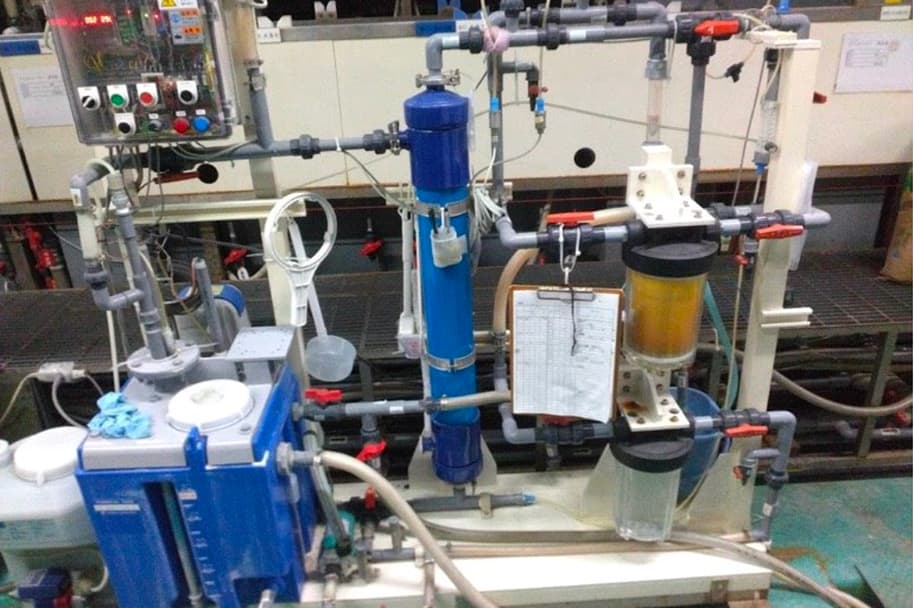
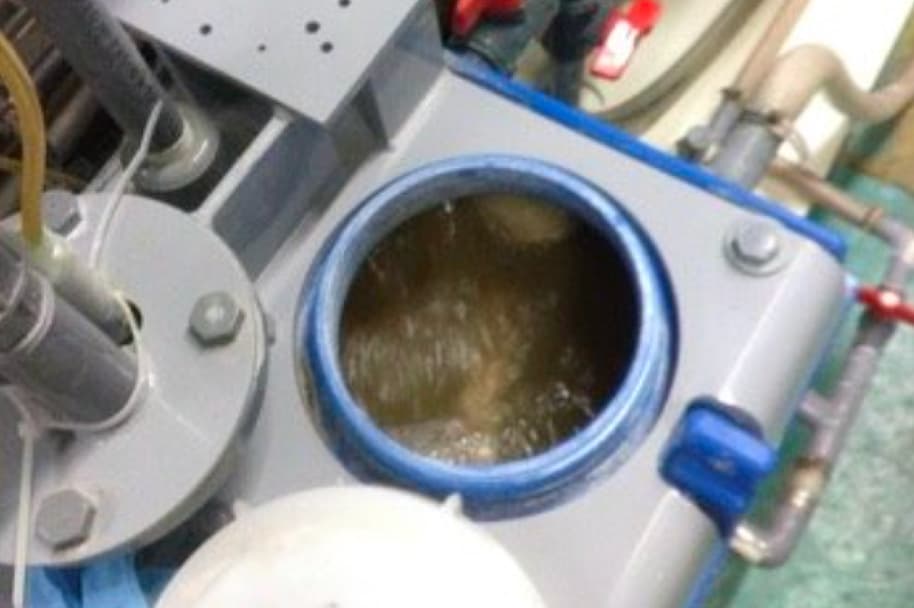
Taking advantage of the characteristics of DPS technology, we are also working on recovery and resource recycling from wastewater containing large amounts of aggregates and contaminants.
-
Photo of a demonstration unit recovering metals from tin-palladium process wastewater
-
Target liquid showing contamination caused by aggregated-solids and impurities
Case Study
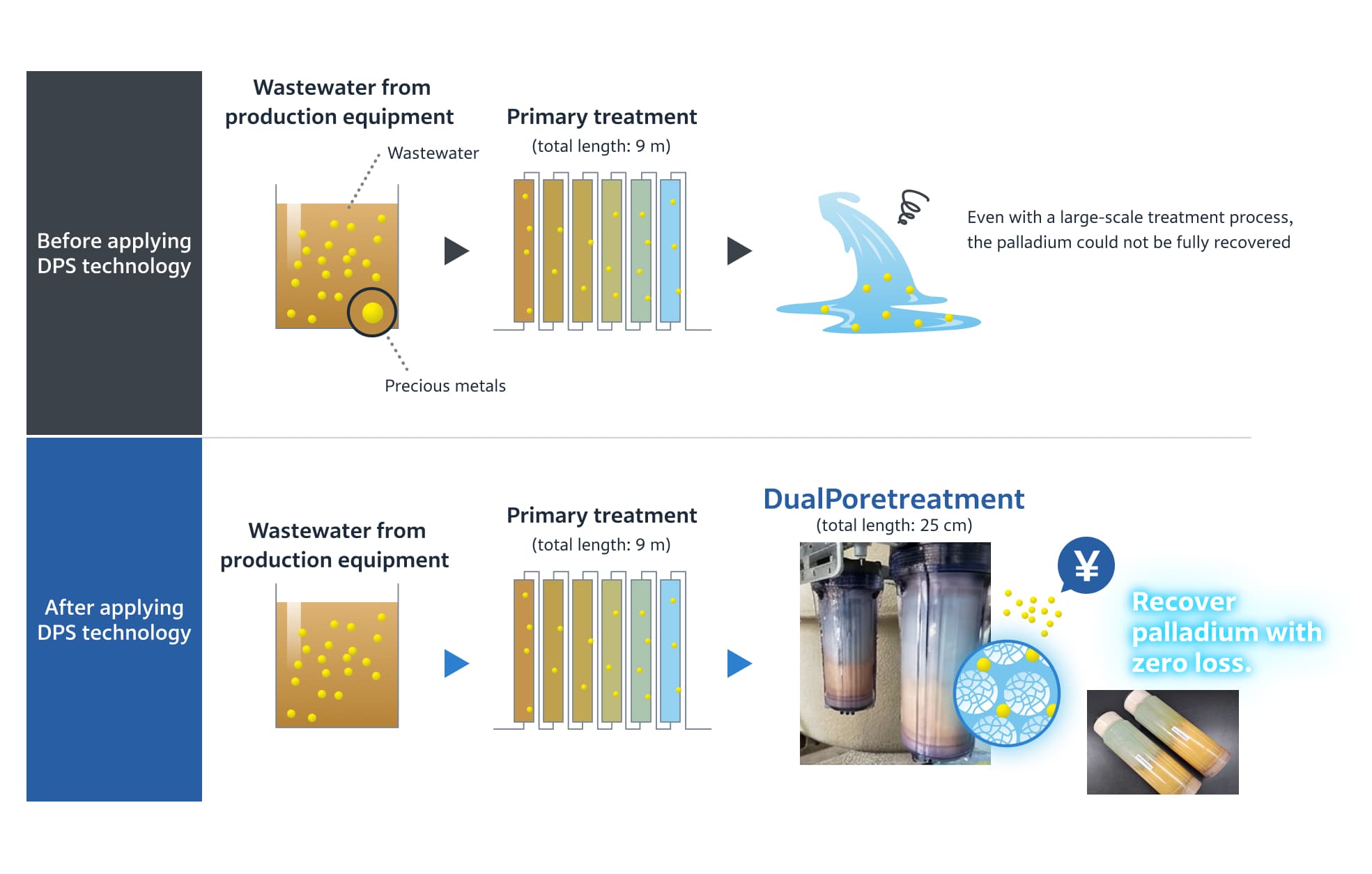
Recovery from wastewater in a chemical product manufacturing process
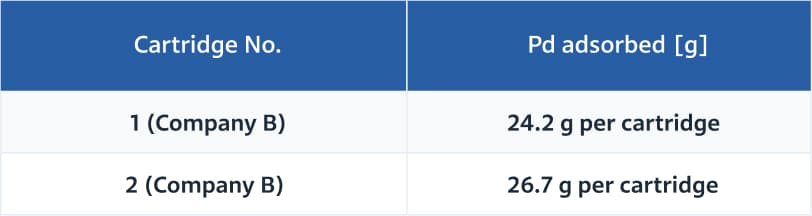
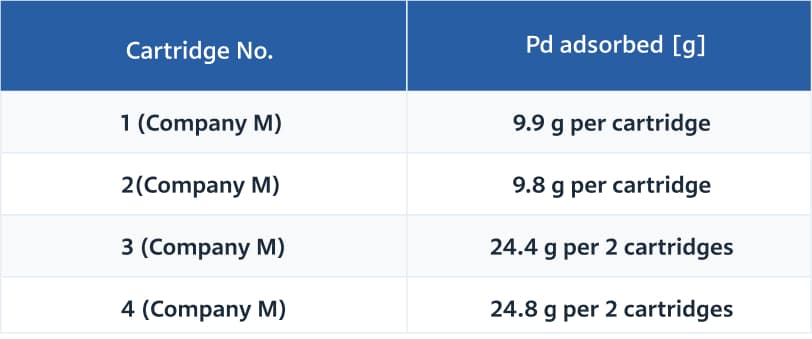
Palladium that escapes recovery in large-scale conventional systems due to limited adsorption surface area can be easily and rapidly adsorbed and recovered by installing DPS cartridges downstream.
Recovery results
Recovery from plating process wastewater
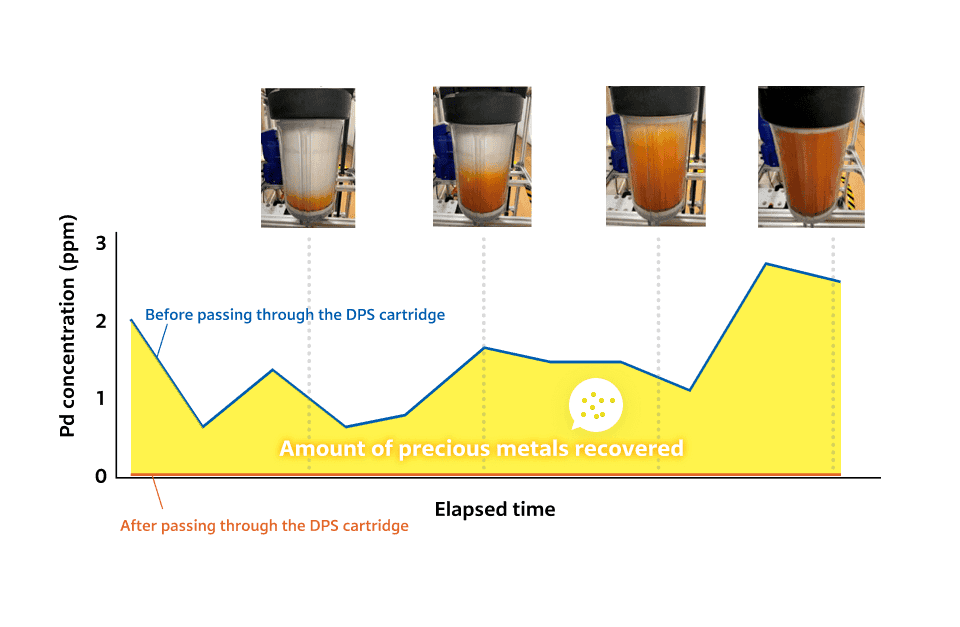
Recovery was carried out from palladium-containing plating rinse water. Palladium recovery was also performed from rinse tank wastewater containing aggregates, which is generally considered difficult to recover from.
Recovery results