Microwave Solutions Business
Design & Simulation
Reactor design and simulations
Numerical simulations using high performance computers play an important role in scaling up reactors. Our simulation technology comprises three main components: electromagnetic field, thermal fluid dynamics, and structural analyses. We employ coupled analysis, a complex technique that combines multiple methodologies depending on the objective. The various software packages we use in simulations are shown below.
Simulation software used at MWCC
 Swipe
to view
| Target of analysis | Software use |
|---|---|
| Electromagnetic field | Ansys HFSS CST Studio Suite |
| Thermal fluid dynamics | Ansys Fluent |
| Particle and Powder Simulation (DEM) | Ansys Rocky |
| Structural analysis | Ansys Mechanical |
| Multiphysics simulations | COMSOL Multiphysics |
Electromagnetic field analysis
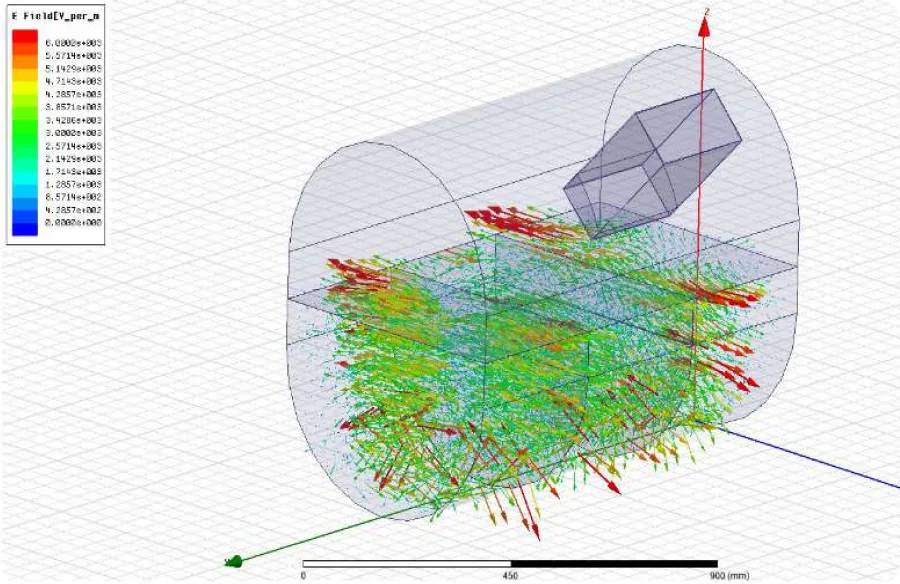
Ansys HFSS
This is used to analyze reactors from lab to bench and pilot scale to commercial scale reactors up to a certain size. It shows how the electromagnetic fields behave for each wavelength (frequency-domain analysis).
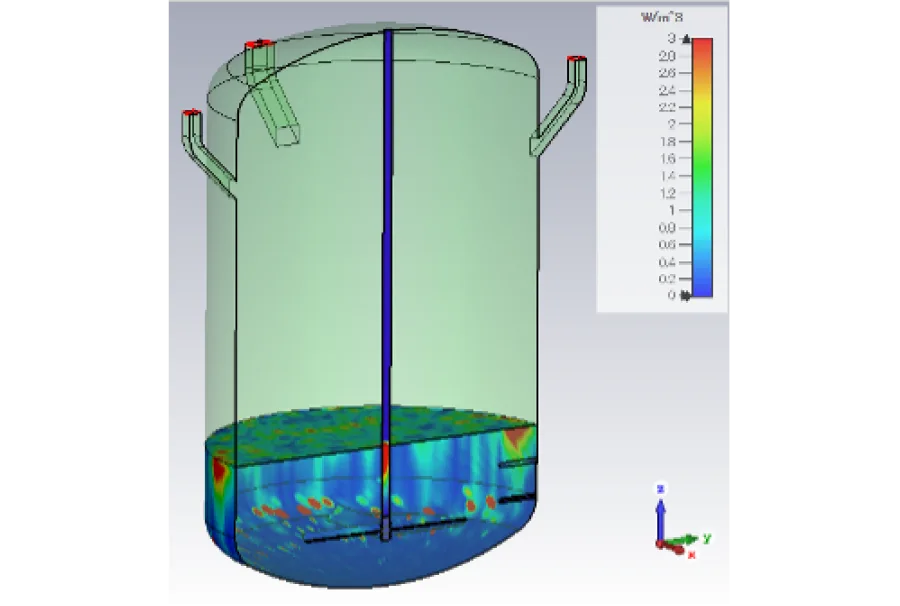
CST Studio Suite
This software is used in analyzing reactors at the pilot scale thanks to the relatively small amount of memory it requires. In addition to frequency-domain analysis, it can calculate electromagnetic field behavior over time (time-domain analysis). It also supports coupled analysis of electromagnetic fields and thermal fluid dynamics.
Thermal fluid dynamics analysis
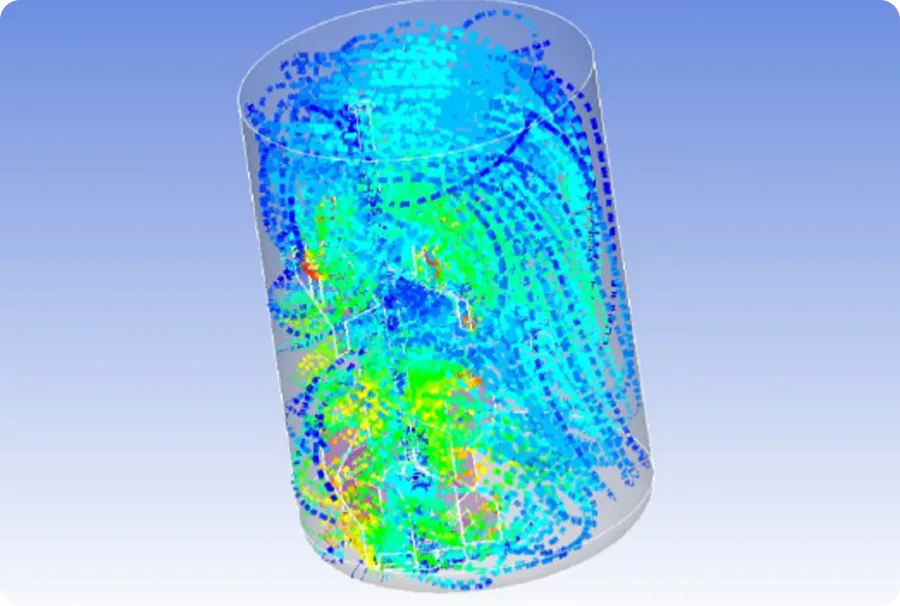
Ansys Fluent
Thermal fluid dynamics analysis solves fluid continuity equations, equations of motion, energy equations, and similar equations, including reaction formulas if required. This allows us to understand temperature changes in the heated molecule, as well as the progress of chemical reactions and the movement of liquids inside the reactor.
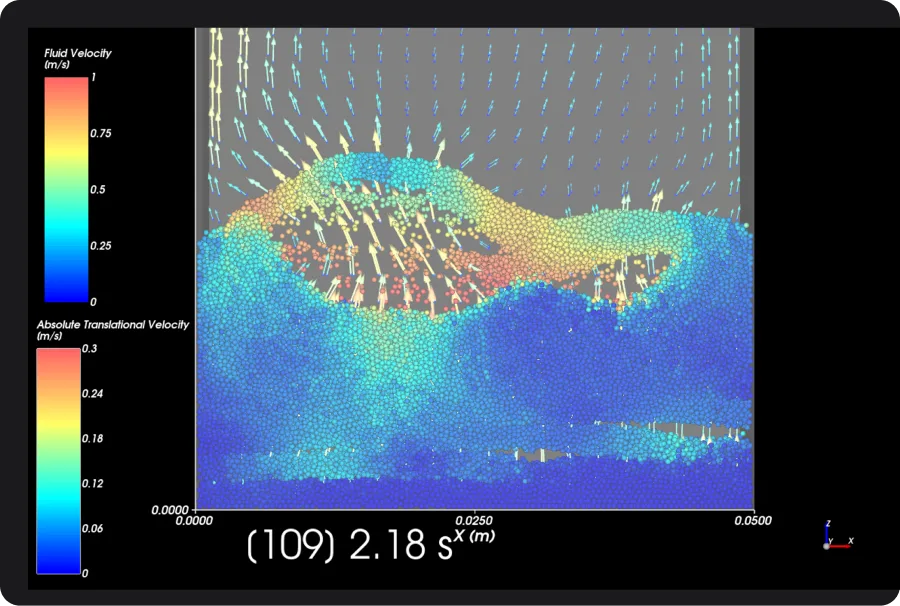
Ansys Rocky
This uses the Discrete Element Method (DEM) to solve particle motion equations when examining the behavior of granular materials, typically catalytic particle systems.
Structural analysis

Ansys Mechanical
Structural analysis calculates the values for the strain and stress generated within the casing from rising pressure inside a reactor. The results of these analyses are used to determine the strength of the casing.
Multiphysics simulations
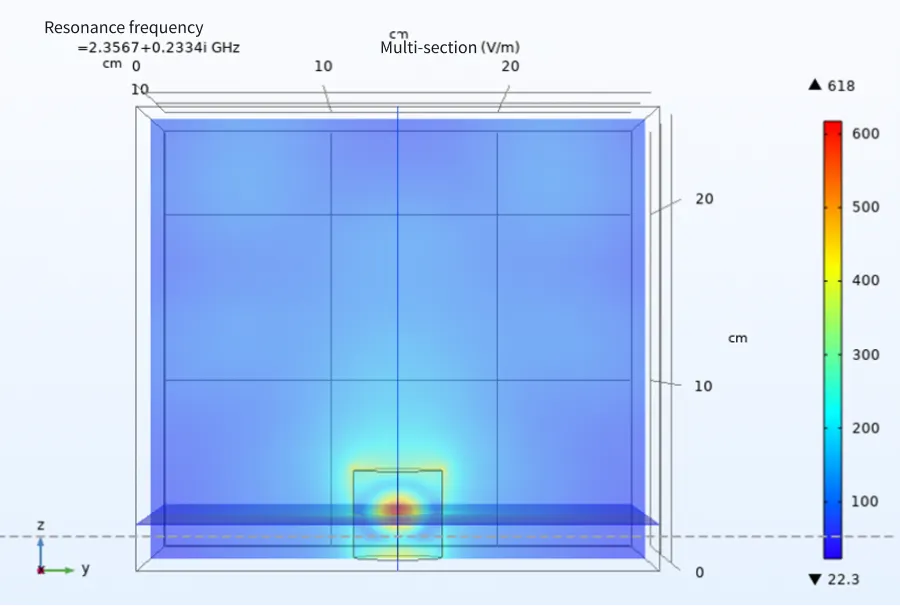
COMSOL Multiphysics
COMSOL Multiphysics® is a general-purpose finite element method (FEM) physics simulation software designed to perform multiphysics simulations. It can calculate the distribution of electromagnetic fields using parameters obtained from complex permittivity measurements and then use those results to calculate down to heat distribution analysis, all within one program. As the name implies, this tool is helpful in considering and connecting the behavior of electromagnetic waves and exothermic behavior in reaction systems with chemical reactions.

Related pages