Focus Areas-Metal Refining and Smelting, (Mineral Treatment Processes)-
Realizing low-carbon, energy-efficient processes
through microwave “direct heating.”
Metal refining and refining and smeltingprocesses consume vast amounts of energy because they require high temperatures. To reduce their environmental impact, we are advancing the electrification of these processes with microwave technology.
Why metal refining and refining and smelting processes, and why now?
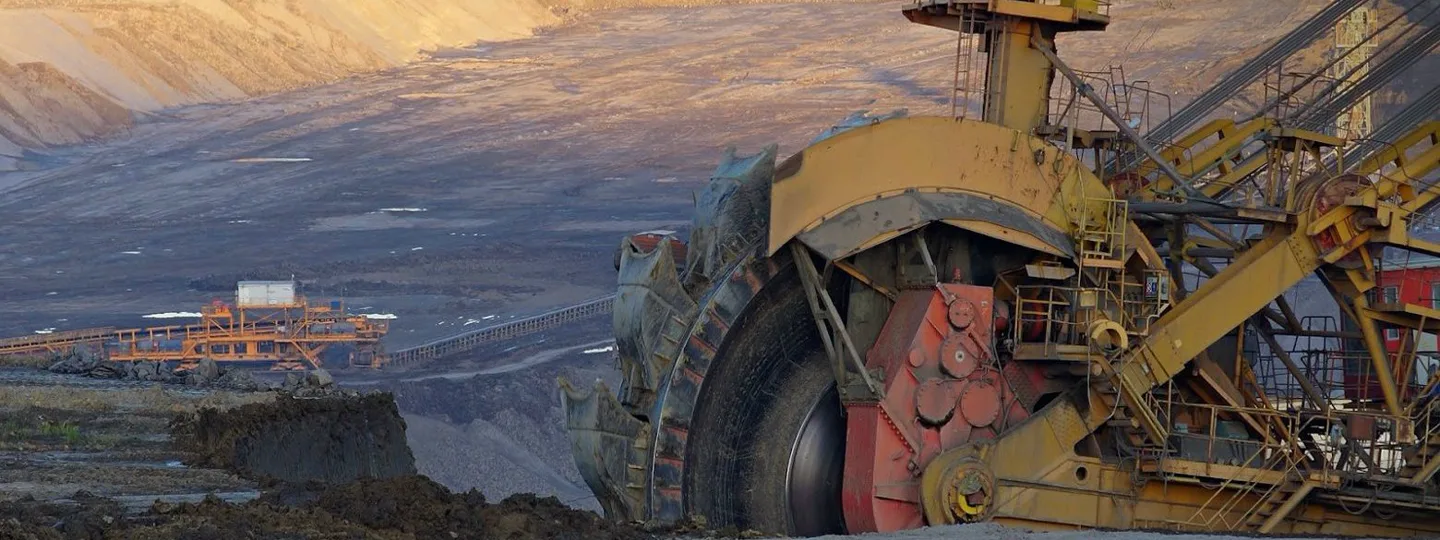
Metal refining and smelting -especially reduction and calcination- are energy-intensive, high-CO₂-emitting sectors—so-called “hard-to-abate industries.” Driven by two major trends, decarbonization and resource security, these processes now call for a fundamental, innovative transformation.
-
01
A massive source of CO₂ emissions
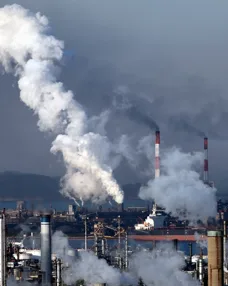
The steel industry alone accounts for roughly 7–8% of global CO₂ emissions (2024), and in Japan about 39% of the industrial sector and around 13% of the nation’s total. In the blast-furnace process, CO₂ is unavoidably emitted during the coke-based reduction step.
-
02
Surging demand for rare metals
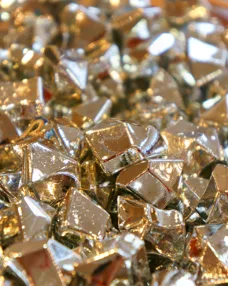
The advance of EVs and decarbonization is driving a sharp rise in demand for rare metals such as lithium. Establishing a low-carbon, stable supply and a system of resource circulation has become a shared global challenge.
The Advantages of Microwave Technology
Microwaves heat the target material itself, directly and from within. Fundamentally different in principle from conventional methods that raise the temperature of the entire furnace, this approach delivers energy savings, low carbon emissions, and a compact footprint all at once.
-
01
Direct heating of the targe
Unlike conventional methods that heat the entire furnace, microwaves heat the target material directly from within, curbing wasteful heat loss and reducing total energy consumption.
-
02
Electrification of thermal processes
Microwave heating is a fully electrified (100%) process, so by harnessing renewable electricity, CO₂ emissions are expected to be reduced by up to 90% or more compared with conventional fossil-fuel processes.
-
03
Compac
Because only specific materials are heated directly and rapidly, temperatures can be raised quickly in a small vessel.
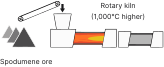
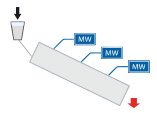
Concept comparison: Rotary kiln vs. microwave rotary hearth furnace

| Rotary kiln | Microwave rotary hearth furnace / others | |
|---|---|---|
| Equipment type |
|
|
| Energy transfer | Indirect | Direct |
| Heat source | LNG / coal-fired burner | Microwave (electric) |
| Temperature | High | High |
| – Material heated | 800–1,200°C | 800–1,200°C |
| – Atmosphere | >1,200°C | ~1,000°C |
| Thermal efficiency | Low | High |
| – Heat dissipation | +++++ | ++ |
| – Packing (fill) rate | ++ | ++++ |
| Yield | Low | High |
| – Dust generation | ++++ | + |
| CO₂ emissions | +++++ | + |
| Energy consumption | ++++ | ++ |
| Equipment size | ++++ | + |
Our Proprietary Standard Bench-Scale Unit
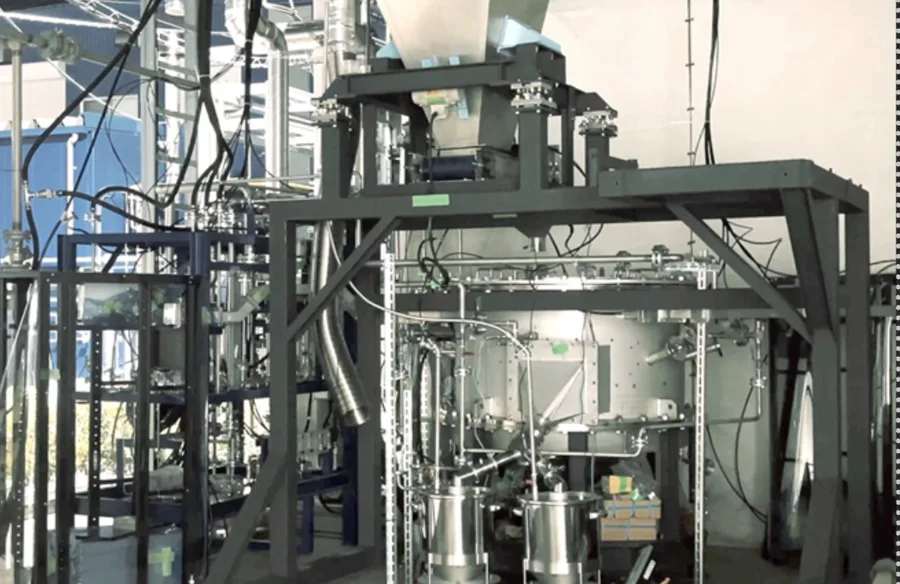
In April 2024, we completed a rotary-hearth-furnace-type bench-scale unit for metal refining and smelting processes, designed to be applicable to a wide variety of ores. It is currently installed and operated at our Osaka Site.
Ores and Processes We Are Working On
Together with our partners, we are advancing demonstration projects in areas central to decarbonization and the circular use of resources.
Metal smelting / mining process development projects (selected examples)
| Target ore | Partner / in-house | Process | Phase | Status |
|---|---|---|---|---|
| Lithium | Mitsui & Co. | Calcination | Phase 2 | Large-scale pilot demonstration launched in FY2023; three-party MoU signed with PMET and Mitsui & Co. |
| Nickel | Pacific Metals | Roasting / reduction |
Phase 2 | Small-scale verification since FY2023; commercial-unit deployment targeted around FY2030. |
| Beryllium | MiRESSO | Melting | Phase 2 | Small-scale demonstration since FY2022; received an order for a pilot facility in FY2024. |
| Iron ore | In-house | Reduction | — | Demonstration testing with the standard bench-scale unit completed. |
| Manganese nodules | The University of Tokyo | Calcination | Phase 2 | Small-scale demonstration in FY2025. |
| Confidential | Confidential | — | — | Basic design of the pilot unit completed. |
Roadmap
Scaling up from the standard bench-scale unit, we will continue our verification efforts toward real-world implementation.
Equipment phase
Contact
We welcome joint demonstration and scale-up with steelmakers, resource companies, engineering firms. ores. Please feel free to get in touch.


Related pages